Joint replacement surgery can be life-changing for people suffering from chronic joint pain, arthritis, or mobility issues. One of the most common questions patients ask before surgery is whether they should choose cemented or cementless joint implants. Understanding the difference between the two can help you make an informed decision and feel more confident about your treatment.
This guide explains how both implant types work, who they are best suited for, and how surgeons decide which option is right for you.
Understanding Joint Implants in Joint Replacement Surgery
Joint implants are artificial components designed to replace damaged joints such as the knee, hip, or shoulder. They help restore movement, reduce pain, and improve overall quality of life.
What Are Cemented Joint Implants?
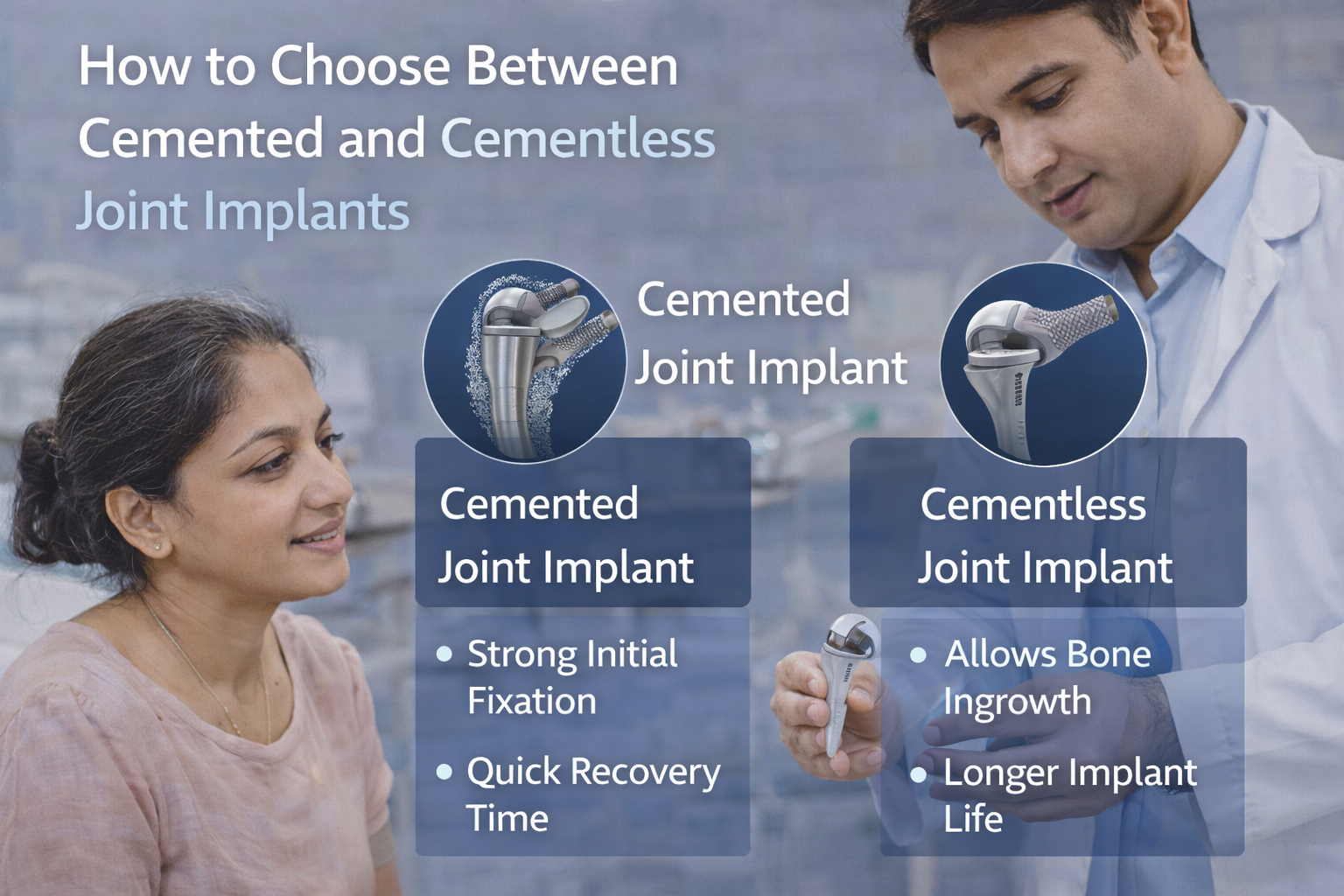
Cemented implants are fixed to the bone using a special medical-grade bone cement. This cement acts as a fast-setting adhesive, holding the implant firmly in place.
Key Features of Cemented Implants
-
Immediate fixation to the bone
-
Faster initial stability
-
Commonly used in knee replacement surgeries
-
Suitable for patients with weaker bone quality
What Are Cementless Joint Implants?
Cementless implants rely on natural bone growth to secure the implant. These implants have a porous or rough surface that allows bone tissue to grow into them over time.
Key Features of Cementless Implants
-
No bone cement required
-
Long-term biological fixation
-
Often used in hip replacements
-
Requires good bone density
Cemented vs Cementless Implants: Key Differences
Fixation Method
-
Cemented implants use bone cement for immediate attachment
-
Cementless implants rely on bone growth over weeks or months
Recovery and Stability
-
Cemented implants provide instant stability
-
Cementless implants take time but may offer better long-term bonding
Longevity
-
Both implant types can last 15–25 years with proper care
-
Implant lifespan depends on activity level, weight, and bone health
Factors That Help Decide the Right Implant Type
Choosing between cemented and cementless implants is not a one-size-fits-all decision. Your surgeon evaluates several important factors before recommending the best option.
Age of the Patient
Younger patients often benefit from cementless implants due to stronger bones, while older patients may do better with cemented implants for immediate fixation.
Bone Quality and Density
Patients with osteoporosis or weaker bones may require cemented implants for secure attachment.
Activity Level and Lifestyle
Active individuals may be better candidates for cementless implants due to their long-term durability.
Type of Joint Being Replaced
-
Knee replacements often use cemented implants
-
Hip replacements may use cementless or hybrid implants
Role of the Surgeon in Implant Selection
An experienced specialist evaluates X-rays, bone scans, and medical history before deciding on the implant type. Consulting a trusted expert like Dr. Rahul Bade ensures that the choice is personalized for safety, durability, and optimal outcomes.
If you are consulting an Orthopedic Surgeon In Pune, implant selection is typically guided by both clinical evidence and patient-specific needs.
Hospital and Surgical Expertise Matters
The success of joint replacement surgery also depends on the hospital’s technology, surgical protocols, and rehabilitation support. Choosing a reputed Joint Replacement Surgery Hospital in Pune ensures access to advanced implants, sterile operating environments, and expert post-operative care.
Recovery Expectations After Joint Replacement
Initial Recovery Phase
-
Cemented implants allow earlier weight-bearing
-
Cementless implants may require partial weight-bearing initially
Long-Term Rehabilitation
Physiotherapy is essential for both implant types to restore strength, flexibility, and mobility.
People Also Ask (FAQs)
Q1. Which implant lasts longer: cemented or cementless?
Both types can last decades. Longevity depends more on surgical technique, patient activity, and post-operative care.
Q2. Is cementless joint replacement painful?
Pain levels are similar for both implant types. Cementless implants may require a slightly longer healing phase due to bone integration.
Q3. How does a surgeon decide the implant type?
Factors such as age, bone quality, joint condition, and lifestyle guide the decision made by a Joint Replacement Surgeon in Pune.
Q4. Can cemented implants loosen over time?
In some cases, yes. However, modern cementing techniques have significantly improved long-term outcomes.
Q5. Should I search for an Orthopedic Surgeon Near Me?
Yes. Consulting a local expert ensures easier follow-ups, rehabilitation support, and continuity of care with a Joint Replacement Doctor in Pune.
Final Thoughts
Choosing between cemented and cementless joint implants is a critical step in your joint replacement journey. The right option depends on your bone health, age, activity level, and the expertise of your surgeon. With proper evaluation, advanced surgical techniques, and post-operative care, both implant types can deliver excellent, long-lasting results.
If you’re considering joint replacement, consult an experienced specialist like Dr. Rahul Bade to receive personalized guidance and achieve the best possible outcome.
Address:
Vignaharta, Sai Canary New Road, near Rugved Uptown, Balewadi, Pune, Maharashtra 411045
Email Us:
berahul@gmail.com
Appointment For Balewadi:
+91 77 6988 1155
Appointment For Somatne:
+91 77 6988 1188